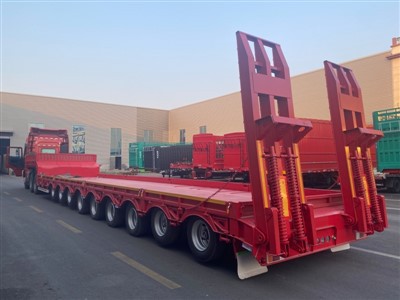
Rear dump trailers are essential workhorses in the construction, mining, and waste management industries, designed to efficiently transport and unload large volumes of materials. One of the most critical aspects of these trailers is their braking system, which ensures safety on the road and at job sites. As a reliable rear dump trailer supplier, we understand the importance of providing trailers equipped with the right braking systems. In this blog, we'll explore the different braking systems available for rear dump trailers.
Air Braking Systems
Air braking systems are the most common type used in heavy - duty rear dump trailers. They are favored for their reliability, power, and ability to handle large loads.
How Air Brakes Work
Air brakes operate on the principle of compressed air. The system consists of an air compressor, air storage tanks, brake chambers, valves, and brake shoes or pads. The air compressor is driven by the vehicle's engine and pumps compressed air into the storage tanks. When the driver presses the brake pedal, a valve opens, allowing the compressed air from the storage tanks to flow into the brake chambers. The air pressure in the chambers then pushes a piston, which in turn activates the brake shoes or pads, causing them to press against the brake drums or rotors, creating friction and slowing down or stopping the trailer.
Advantages of Air Brakes
- Powerful Braking Force: Air brakes can generate a significant amount of braking force, making them ideal for heavy rear dump trailers carrying large loads. This ensures that the trailer can be safely stopped even when fully loaded.
- Reliability: Air braking systems are relatively simple in design and have fewer moving parts compared to some other braking systems. This simplicity reduces the likelihood of mechanical failures, making them a reliable choice for continuous use in demanding work environments.
- Ease of Maintenance: The components of an air braking system are generally easy to access and maintain. Regular maintenance tasks such as checking air pressure, inspecting hoses and valves, and replacing brake shoes can be carried out with relative ease.
Disadvantages of Air Brakes
- Complexity in Installation: Installing an air braking system requires a certain level of technical expertise. The system needs to be properly calibrated and connected to the vehicle's air supply and control systems.
- Moisture Issues: Compressed air can contain moisture, which can lead to corrosion and damage to the components of the air braking system. To mitigate this, air dryers are often used, but they add to the cost and complexity of the system.
Hydraulic Braking Systems
Hydraulic braking systems are another option for rear dump trailers, particularly for smaller and medium - sized models.
How Hydraulic Brakes Work
Hydraulic brakes use a liquid (usually brake fluid) to transmit force from the brake pedal to the brake components. When the driver presses the brake pedal, it pushes a piston in the master cylinder, which forces brake fluid through a series of brake lines to the wheel cylinders or calipers at each wheel. The pressure of the brake fluid then causes the brake shoes or pads to press against the brake drums or rotors, creating friction and braking the trailer.
Advantages of Hydraulic Brakes
- Smooth Braking: Hydraulic braking systems provide a smooth and consistent braking feel. The hydraulic fluid allows for precise control of the braking force, which can result in a more comfortable driving experience.
- Compact Design: Hydraulic brakes are generally more compact than air brakes, which can be an advantage in trailers with limited space. This can also make them a good choice for trailers that need to be more maneuverable.
- Lower Initial Cost: The initial cost of installing a hydraulic braking system is often lower than that of an air braking system. This can make them an attractive option for budget - conscious buyers.
Disadvantages of Hydraulic Brakes
- Limited Braking Power: Compared to air brakes, hydraulic brakes have limited braking power. This makes them less suitable for very heavy rear dump trailers that carry large - volume loads.
- Fluid Leakage: Brake fluid can leak from the hydraulic system if there are any cracks in the brake lines or seals. A leak can lead to a loss of braking power, which is a serious safety hazard.
Electric Braking Systems
Electric braking systems are commonly used in trailers, including some rear dump trailers.


How Electric Brakes Work
Electric brakes are activated by an electrical signal from the towing vehicle. When the driver applies the brakes in the towing vehicle, a brake controller sends an electrical current to the electric brake magnets on the trailer wheels. The magnetic force generated by the current causes the brake shoes to press against the brake drums, creating friction and braking the trailer.
Advantages of Electric Brakes
- Easy Installation: Electric braking systems are relatively easy to install, especially on trailers that are already equipped with an electrical connection to the towing vehicle. This can save time and money during the installation process.
- Proportional Braking: Many modern electric brake controllers allow for proportional braking, which means that the amount of braking force applied to the trailer is proportional to the braking force applied in the towing vehicle. This provides a more seamless and coordinated braking experience.
- Low Maintenance: Electric brakes have fewer moving parts compared to air and hydraulic brakes, which generally results in lower maintenance requirements.
Disadvantages of Electric Brakes
- Dependence on Towing Vehicle: Electric brakes rely on the electrical system of the towing vehicle. If there are any issues with the electrical connection or the brake controller, the braking performance of the trailer can be affected.
- Limited Braking Force for Heavy Loads: Similar to hydraulic brakes, electric brakes may not provide sufficient braking force for extremely heavy rear dump trailers carrying large amounts of material.
Comparison of Braking Systems
When choosing a braking system for a rear dump trailer, several factors need to be considered, including the size and weight of the trailer, the type of loads it will carry, the operating conditions, and the budget.
- Load Capacity: If the rear dump trailer is intended to carry heavy loads, an air braking system is usually the best choice due to its high braking power. For lighter loads, hydraulic or electric brakes may be sufficient.
- Operating Conditions: In environments where moisture is a significant issue, such as in coastal areas or during heavy rain, air brakes with proper air dryers may be more reliable. Electric brakes are a good option for trailers that are frequently connected and disconnected from different towing vehicles.
- Budget: Hydraulic and electric braking systems generally have a lower initial cost compared to air braking systems. However, long - term maintenance costs should also be taken into account.
Our Rear Dump Trailers with Different Braking Systems
As a rear dump trailer supplier, we offer a range of rear dump trailers equipped with different braking systems to meet the diverse needs of our customers.
- The High - Capacity Compliant Rear Dumper: This trailer is designed for high - capacity loads and is typically equipped with an air braking system to ensure safe and efficient operation.
- Rear Dump Trailer With 5 Axles: With its large size and high load - carrying capacity, this trailer is well - suited for heavy - duty applications. The air braking system provides the necessary power to stop the trailer safely.
- Rear Dump Trailer With 3 Axles: This medium - sized trailer can be equipped with either a hydraulic or an electric braking system, depending on the customer's requirements and budget.
Conclusion
The choice of braking system for a rear dump trailer is a critical decision that can impact the safety, performance, and cost of ownership. Understanding the different types of braking systems available, their advantages and disadvantages, and how they fit into different applications is essential for making an informed choice. As a rear dump trailer supplier, we are committed to providing our customers with high - quality trailers equipped with the most suitable braking systems. If you are interested in purchasing a rear dump trailer or have any questions about our products, we invite you to contact us for a detailed discussion and procurement negotiation.
References
- Automotive Brake Systems Manual - Various industry - standard manuals on brake systems available in libraries or automotive industry literature.
- Manufacturer specifications of rear dump trailers and their braking systems.