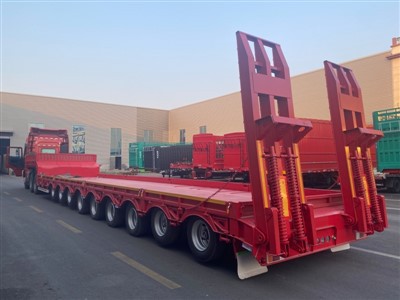
When it comes to transporting boats, various options are available in the market. One question that often arises is whether a skeletal trailer can be used for this purpose. As a supplier of skeletal trailers, I am well - versed in the capabilities and limitations of these trailers, and I'm here to explore this topic in detail.
Understanding Skeletal Trailers
Skeletal trailers are primarily designed for container transport. They are characterized by their lightweight and open - frame structure, which makes them highly efficient for hauling standard shipping containers. The design focuses on providing a sturdy base to support the container while minimizing the overall weight of the trailer. This results in better fuel efficiency and higher payload capacity for the transport vehicle.
For instance, our Skeletal Container Semi Trailer For 20ft/40ft Container Transport is specifically engineered to handle 20 - foot and 40 - foot containers. It features a robust frame that can withstand the rigors of long - distance transportation and heavy loads. Similarly, our 3 Axles Skeletal Semi Trailer and 3 Axles Skeleton Container Trailer offer enhanced stability and load - bearing capacity with their three - axle configurations.
Can a Skeletal Trailer Be Used for Transporting Boats?
The short answer is yes, but with some considerations. Let's break down the factors that determine the suitability of a skeletal trailer for boat transportation.
Advantages of Using a Skeletal Trailer for Boat Transport
- Cost - Efficiency: Skeletal trailers are generally more affordable than specialized boat trailers. Since they are mass - produced for container transport, the economies of scale come into play, resulting in lower purchase costs. This can be a significant advantage for boat owners or transport companies looking to minimize their upfront investment.
- Versatility: A skeletal trailer can be used for multiple purposes. When not transporting boats, it can be employed for container hauling, providing an additional source of revenue or utility. This dual - use capability makes it a more attractive option for businesses with diverse transportation needs.
- Payload Capacity: Skeletal trailers are designed to carry heavy loads. Most boats, especially smaller to medium - sized ones, fall well within the payload capacity of a typical skeletal trailer. This means that the trailer can handle the weight of the boat without any issues, ensuring safe and stable transportation.
Challenges of Using a Skeletal Trailer for Boat Transport
- Lack of Specialized Features: Unlike specialized boat trailers, skeletal trailers do not come with features such as boat - specific cradles, keel supports, or adjustable bunks. These features are crucial for securely holding the boat in place during transport and preventing damage. Without them, the boat may shift or move during transit, increasing the risk of scratches, dents, or more severe structural damage.
- Compatibility: Boats come in a wide variety of shapes and sizes. A skeletal trailer's standard design may not be compatible with all boat types. For example, boats with unusual hull shapes or large overhangs may not fit properly on a skeletal trailer, making it difficult to secure them safely.
- Safety Concerns: The open - frame design of a skeletal trailer may not provide the same level of protection as a closed - in boat trailer. During transport, the boat is more exposed to the elements, road debris, and other hazards. Additionally, the lack of proper tie - down points and support structures can increase the risk of the boat becoming loose or detached from the trailer.
Modifications and Solutions
If you decide to use a skeletal trailer for boat transport, there are several modifications and solutions that can help address the challenges mentioned above.
- Custom - Made Supports: You can have custom - made supports fabricated to fit the specific shape of your boat. These supports can be attached to the skeletal trailer's frame, providing a stable base for the boat. For example, foam - padded cradles can be designed to cradle the hull of the boat and prevent it from shifting.
- Enhanced Tie - Down Systems: Installing a more robust tie - down system is essential for securing the boat on the trailer. High - strength straps and winches can be used to hold the boat in place and prevent movement during transit. Make sure to use proper tie - down techniques and follow the manufacturer's recommendations for securing the load.
- Weather Protection: To protect the boat from the elements, you can use a boat cover. A high - quality, waterproof cover can shield the boat from rain, sun, and road debris. Additionally, you may consider adding a wind deflector to the front of the trailer to reduce wind resistance and protect the boat from wind - driven debris.
Case Studies
Let's look at a few real - world examples of using skeletal trailers for boat transport.
A small - scale boat rental business decided to use a skeletal trailer for transporting their fleet of small fishing boats. They had a limited budget and needed a cost - effective solution. By having custom - made supports fabricated and installing a reliable tie - down system, they were able to use the skeletal trailer safely and efficiently. The trailer's versatility also allowed them to use it for other purposes when the boats were not being transported, providing an additional benefit.


On the other hand, a large - scale boat manufacturer attempted to use a skeletal trailer for transporting their high - end luxury yachts. However, due to the complex hull shapes and large size of the yachts, they faced significant challenges. The lack of specialized features on the skeletal trailer made it difficult to secure the yachts properly, and they eventually had to switch to specialized boat trailers to ensure the safety and integrity of their products.
Conclusion
In conclusion, a skeletal trailer can be used for transporting boats, but it is not without its challenges. The decision to use a skeletal trailer should be based on a careful evaluation of your specific needs, budget, and the type of boat you need to transport. If you are willing to make the necessary modifications and take the appropriate safety precautions, a skeletal trailer can offer a cost - effective and versatile solution for boat transportation.
If you are considering using a skeletal trailer for boat transport or have any questions about our skeletal trailer products, we encourage you to contact us for a detailed discussion. Our team of experts is ready to assist you in finding the best solution for your transportation needs. Whether you need advice on modifications, help with compatibility issues, or are interested in purchasing a skeletal trailer, we are here to support you.
References
- "Transportation Engineering Handbook" by the Institute of Transportation Engineers
- "Boat Trailering Guide" by the American Boat and Yacht Council