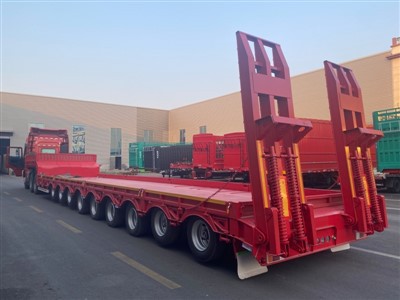
Loading a wind blade onto a trailer is a complex and highly technical process that requires careful planning, specialized equipment, and a well - trained team. As a wind blade trailer supplier, I have witnessed firsthand the importance of getting this process right to ensure the safe and efficient transportation of these massive components. In this blog, I will share a step - by - step guide on how to load a wind blade onto a trailer, along with some essential considerations.
Step 1: Preparation
Before any loading operation begins, thorough preparation is key. First, the trailer must be carefully inspected to ensure it is in optimal condition. Check the tires for proper inflation and any signs of wear, examine the brakes to make sure they are functioning correctly, and verify the structural integrity of the trailer frame.
The loading area also needs to be prepared. It should be a flat, stable surface with enough space to maneuver the crane or lifting equipment. Any obstacles in the vicinity should be removed to prevent interference during the loading process.
Next, gather all the necessary equipment. This includes slings, shackles, and other rigging hardware that are rated for the weight and dimensions of the wind blade. Make sure all the equipment is in good condition and has been recently inspected for safety.
Step 2: Positioning the Trailer
Once the preparation is complete, position the trailer accurately at the loading site. Use a laser level or other alignment tools to ensure the trailer is perfectly level and in the correct position relative to the wind blade. The trailer should be placed in such a way that the wind blade can be easily loaded onto it without any sharp turns or awkward angles.
If the trailer has adjustable features, such as extendable beds or hydraulic leveling systems, adjust them according to the length and weight distribution of the wind blade. This will help to evenly distribute the load and prevent any damage to the trailer or the wind blade during transportation.
Step 3: Lifting the Wind Blade
Lifting the wind blade is a critical step that requires a high - level of precision. A suitable crane or lifting device must be selected based on the size and weight of the wind blade. The crane operator should be experienced and familiar with the specific requirements of lifting wind blades.
Attach the slings and shackles to the wind blade at the designated lifting points. These points are carefully designed to ensure the blade is lifted evenly and without causing any stress or damage. Before lifting, double - check all the connections to make sure they are secure.
Slowly and steadily lift the wind blade off the ground, keeping it as level as possible. Monitor the load closely during the lifting process to detect any signs of imbalance or movement. If there are any issues, stop the lifting operation immediately and make the necessary adjustments.
Step 4: Loading the Wind Blade onto the Trailer
Once the wind blade is lifted to the appropriate height, carefully move it towards the trailer. The crane operator should work in close coordination with the ground crew to ensure the wind blade is guided onto the trailer smoothly.
Lower the wind blade onto the trailer at a slow and controlled pace. Make sure the wind blade is centered on the trailer and aligned with the support structures. Once the wind blade is in place, use additional straps or clamps to secure it firmly to the trailer. This will prevent the blade from shifting during transportation.
Step 5: Securing the Load
After the wind blade is loaded onto the trailer, proper securing of the load is essential. Use high - strength straps and chains to secure the wind blade to the trailer's tie - down points. Make sure the straps are tightened evenly to prevent any movement or vibration.
Check the tension of the straps regularly during the loading process to ensure they remain tight. In addition to the straps, consider using additional support structures, such as blocks or braces, to provide extra stability to the wind blade.
Step 6: Final Inspection
Once the wind blade is loaded and secured, conduct a final inspection. Check all the connections, straps, and support structures to make sure they are in place and secure. Inspect the wind blade for any signs of damage that may have occurred during the loading process.
Verify that the trailer's lights, brakes, and other safety features are functioning correctly. Take note of any potential issues and address them before the trailer departs for its destination.
Specialized Trailers for Wind Blade Transportation
As a wind blade trailer supplier, we offer a range of specialized trailers designed specifically for transporting wind blades. Our Wind Blade Trailer with Adapter is equipped with an adjustable adapter that can accommodate different types and sizes of wind blades. This feature provides flexibility and ensures a secure fit for the wind blade during transportation.
The Wind Turbine Blade Transport Trailer is another option that is designed to handle the unique challenges of transporting wind turbine blades. It has a robust structure and advanced suspension system that can withstand the weight and vibrations of the wind blade.
Our Windmill Blade Trailer is specifically engineered for the transportation of windmill blades. It offers excellent stability and maneuverability, making it an ideal choice for long - distance transportation.
Considerations for Safe Transportation
In addition to the loading process, there are several considerations for the safe transportation of wind blades. First, comply with all local and national regulations regarding the transportation of oversized and overweight loads. This may include obtaining special permits and following specific routes.


Plan the transportation route carefully, taking into account factors such as road conditions, bridges, and tunnels. Avoid routes with sharp turns, low - clearance areas, or other potential hazards.
During transportation, monitor the load regularly to ensure it remains secure. Make stops at regular intervals to check the straps and connections and to inspect the wind blade for any signs of damage.
Conclusion
Loading a wind blade onto a trailer is a complex but manageable process when proper procedures are followed. As a wind blade trailer supplier, we understand the importance of providing high - quality trailers and support to ensure the safe and efficient transportation of wind blades.
If you are in the market for a wind blade trailer or have any questions about the loading process, we are here to help. Our team of experts can provide you with detailed information and guidance to meet your specific needs. Contact us today to start the conversation about your wind blade transportation requirements.
References
- American Society of Mechanical Engineers (ASME). Standards for Lifting and Rigging Equipment.
- Federal Motor Carrier Safety Administration (FMCSA). Regulations for the Transportation of Oversized and Overweight Loads.
- Wind Energy Industry Best Practices Guides for Wind Blade Transportation.